God
Luke 1: John the Baptist
In the first chapter of Luke, we learn about the birth of Jesus and His cousin John the Baptist. Before we dive into the birth of Jesus, let’s talk about who John the Baptist was and what he did to prepare the way for Jesus. John came from a very distinct family. In fact, we read that both of John’s parents were righteous before God, following all the commandments and ordinances of the Lord without fault (Luke 1:6). What does this mean? These are the same words used to describe Abraham’s relationship with God. Abraham trusted God, had faith in His word, and followed after God in obedience. In fact, this is what God instructed Abraham: “I am Almighty God; walk before Me and be blameless” (Genesis 17:1). Like Abraham, Zacharias and Elizabeth were also righteous and blameless. They were faithful to God and obedient in everything He asked of them. As we’ll soon see, John will also follow in the example of his parents.
John’s father is soon visited by an angel who informs him that God has heard his prayers and that his barren wife will now bear a child. Here is what the angel tells us about John.
Luke 1:15
“For he will be great in the sight of the Lord, and shall drink neither wine nor strong drink. He will also be filled with the Holy Spirit, even from his mother’s womb.”
Almost immediately, we discover that John is no ordinary child. He is destined to be great in the sight of the Lord, and because he will be great, God equips him with the Holy Spirit. His task will be monumental, and his entire life—from start to finish—will be dedicated to preparing the way for Messiah. Luke continues, giving us further insight into his future:
Luke 1:16-17
“And he will turn many of the children of Israel to the Lord their God. He will also go before Him in the Spirit and power of Elijah, to turn the hearts of the fathers to the children, and the disobedient to the wisdom of the just, to make ready a people ready for the Lord.’
There is a lot of description and context packed into this seemingly simple verse. When we read this passage, it ought to prompt a variety of questions, some of which we can discuss at a different time, but they are still worth considering.
What does this mean to turn many of the children of Israel to the Lord their God?
What does it mean when it says that he will turn the hearts of the fathers to the children?
What does it mean to turn the disobedient to the wisdom of the just?
What does it mean to make ready a people prepared for the Lord?
There was a lot John was being called to do, and there is so much meaning packed into this verse. For our purposes, it’s important to know that his role was to prepare the people’s hearts for the coming Messiah. At this point in time, the people of Israel had become spiritually alienated from God. In fact, for many years, God continued to warn the people, through the prophets, that they would turn from and go after other gods, and over time they would become estranged from their God. The prophet Isaiah, whom Jesus references many times in His lessons, also foretells this about God’s people:
Isaiah 1:2-4
“Hear, O heavens, and give ear, O earth! For the Lord has spoken: I have nourished and brought up children, and they have rebelled against Me; The ox knows its owner and the donkey its masters’ crib; but Israel does not know, and My people do not consider… They have forsaken the Lord, they have provoked to anger the Holy One of Israel, They have turned away backward.”
God has been with His people from the beginning; He nourished them and guided them as children when He brought them up out of Egypt, yet despite all that He has done, they have rebelled against Him. Isaiah contrasts them with animals, saying that even the animals are familiar with their masters and know their home, but not God’s people. They do not know Him, nor do they even consider Him. Since the days of Abraham, God has sought to be with them, to be their God, to bless and multiply them, and so forth. They have not always shared the same desire. Instead, they have turned away backward. It doesn’t stop there, because their rebellion has deeply affected their spiritual well-being. Again, Isaiah tells us of their condition:
Isaiah 1:5-6
“The whole head is sick, and the whole heart faints. From the sole of the foot even to the head, there is no soundness in it, but wounds and bruises and putrefying sores; they have not been closed or bound up, or soothed with ointment.”
This is pretty descriptive of how spiritually sick God’s people had become, and this was a significant amount of time before Christ even came. It continued to get worse as the years passed. From head to toe, the entire nation was filled with sin, corruption, and sickness. Spiritually, they were like a man covered in sores, bruises, open wounds, and with no relief. This was the state of the people when the birth of John the Baptist was announced, and this was the diagnosis when Jesus came into this world, and this is why John the Baptist’s mission was to turn the children of Israel back to God and to make ready a people ready for the Lord. Jesus’ arrival meant healing, restoration, and life, but before the children of Israel could experience any of these things, it was necessary that they first recognize the condition they were in and why they were in that condition. John was being sent to help the people understand and see how much they had turned from God and His law. They were dying in their sins, and the first step for them, as well as us, is to recognize one’s sinfulness and turn in repentance.
At this point, it is worth noting that Luke tells us that one of John’s purposes was to “turn the hearts of the fathers to the children” (1:17). This is a significant passage, and it is important that we understand its origin because it will further help us understand John’s mission. Here, Luke is actually quoting from the book of Malachi, the last book of the Old Testament. Let us read the verse in its full context:
Malachi 4:4
“Remember the Law of Moses, My servant, which I commanded him in Horeb for all Israel.”
First, the prophet reminds the people to remember the Law of Moses, which was given on Mount Sinai. One of John’s first tasks would be to get people to do this: remember the Law of Moses. Why? If John were to call to people to repent, it’s impossible to do so without the Law of Moses. The very definition of sin is breaking the Law God gave to Moses (1 John 3:4). We cannot repent of sin if we do not know what sin we have committed. The first step to repentance is understanding that we have rebelled against God by breaking His commandments. This is the message John came to preach. Forgiveness was on the horizon, but the people needed to first acknowledge and come to terms with their sin and their condition. Next, we read God say following through the prophet Malachi:
Malachi 4:5-6
“Behold, I will send you Elijah the prophet before the coming of the great and dreadful day of the Lord. And he will turn the hearts of the fathers to the children, and the hearts of the children to their fathers, lest I come and strike the earth with a curse.”
Who is Elijah the prophet and how is he connected to John? Elijah was remembered throughout history as the prophet who turned Israel back to God. His story, which is worth reading, is found in 1 Kings 17. Elijah was an incredible prophet, and John was said to be the one who would go before Jesus in the spirit of Elijah (Luke 1:17). This means that John would come with the same purpose and message as Elijah: to call Israel back to God. What does this look like? Both Malachi and Luke tell us that John’s purpose would be to turn the hearts of the fathers back to the children and the hearts of the children back to the fathers. This probably has a variety of meanings, but essentially John’s calling was to reconnect the hearts of the people with the hearts of the fathers: Abraham, Isaac, and Jacob. The call to repentance was not just for forgiveness of sins, but it was a call for the people to remember and return to the faith, the righteousness, the covenant, and the relationship that God established with the fathers. God made His covenant (promises) with the fathers, and He promised Abraham that “I will establish My covenant between Me and your descendants after you in their generations, for an everlasting covenant” (Genesis 17:7). Sin had not only separated the people from God, but it had separated them from their past, separated them from those whom God had chosen to be both the forerunners and examples of our relationship with God.
So what does all of this mean? God doesn’t just desire a people who repent of their sins, accept forgiveness, and then move on with their lives. He has come to redeem His people in order to fulfill the promises He delivered to the fathers—our fathers—long ago. He has come to turn our hearts back to the faith and the righteousness of the fathers. In order for this to happen—before we can truly receive the healing of Christ—we must heed the message of John: “Remember the Law of Moses which I commanded him in Horeb for ALL Israel, with the statutes and judgments.” In other words, repent, for the kingdom of heaven is at hand.
Hagar and Ishmael
Read Genesis 16-17
Questions to consider:
a. What are the promises God gave to Abraham and Sarah?
b. What does it mean to follow or walk in the promises of God?
c. According to these chapters, what are some challenges to faith?
Genesis 16:1
“Now Sarai, Abraham’s wife, had borne him no children.”
This is how the beginning of chapter 16 begins, reminding us that Abraham and Sarah were still without child. As the time begins to pass and the couple continues to age, it’s likely that the wonderings kept getting stronger. In the previous chapters, we hear God tell Abraham that the heir is not going to be his servant Eliezer, rather the promised child will, in fact, come from Abraham’s own body. This likely offered a little reassurance, but here we are again, reminded that Sarah had yet to bear Abraham any children. It is in these times of uncertainty that we will often begin exploring other alternatives. We begin to panic or worry or doubt, which then pushes us to take matters into our own hands. In this case we read the following:
Genesis 16:1-2 NLT
“But she had an Egyptian servant named Hagar. So Sarai said to Abram, ‘The LORD has prevented me from having children. Go and sleep with my servant. Perhaps I can have children through her.” And Abram agreed with Sarai’s proposal.’”
It was custom in these times that if a woman could not bear children for her husband that her servants could do so on her behalf. Here we find Sarah unable to provide children for Abraham, so the next viable option would be to offer her maidservant Hagar. At this point, Abraham and Sarah know that God is going to provide an heir, and we just learned that the heir is going to come from Abraham’s own body. What they haven’t been told, as far as we can tell, is if the heir would come directly from Sarah’s body. So this might explain why, when Sarah approaches Abraham with the idea of bearing the child through Hagar, he doesn’t deny her. In fact, we read the following:
Genesis 16:2-4 NLT
“And Abram agreed with Sarai’s proposal… So Abram had sexual relations with Hagar, and she became pregnant. But when Hagar knew she was pregnant, she began to treat her mistress, Sarai, with contempt.”
Abraham listens to his wife’s advice, and through him Hagar conceives a child. The plan seems to have worked. Hagar becomes pregnant, and the supposed promised child would soon be born. Everything seems to go as planned, but the couple soon discovers that Ishmael will not be the promised child. Ishmael would be blessed by God, but he will not be the one God had been speaking of. Why, then, if this was not the promised child did Abraham and Sarah choose this alternative? Did they lose faith? Why did God allow them to move forward? As we look at this story from the outside, it’s easy to question the hasty decision made by Abraham and Sarah. On the surface it looks like they lacked the faith to trust in God. But we have to ask ourselves: was this move to use Hagar a lapse in faith? Are there not times in our lives when we act in faith, yet our decisions turn out to be wrong or misinformed? The couple was acting on the word that God had given them—that they would have a son, and that son would come through Abraham’s body. Technically, Ishmael was a son and he did come from the body of Abraham. As great as this moment was, it didn’t change the fact that Ishmael was still not the promised son… regardless of how much they wanted or hoped he would be.
God does, in time, bless Ishmael, and as we will soon see, Abraham and Sarah will have Isaac, but all of this still prompts the question: why allow the couple to go through all of this? At this point, why not just fulfill the promise? After all, the birth of Ishmael causes a great deal of contention between Sarah and Hagar, so much so, that Hagar fled. There is a lot of distress on all sides. What ever the purpose of this trial, there is a significant lesson to be learned.
Paul tells us in the book of Galatians:
Galatians 4:22-23 NLT
“The Scriptures say that Abraham had two sons, one from his slave wife (Hagar) and one from his freeborn wife (Sarah). The son of the slave wife was born in a human attempt to bring about the fulfillment of God’s promise. But the son of the freeborn wife was born as God’s own fulfillment of His promise.”
Abraham had two sons, and in this particular story, Ishmael was born to the slave woman according to the flesh. What does this mean? Abraham and Sarah, though well-intentioned, produced a son through their own planning and efforts. This is what “according to the flesh or according to human attempt” means. Ishmael was the product of their own efforts. When it comes to His promises, God often calls us to faithfully wait upon Him. As we all know, waiting is difficult, especially when we posses the means to work it out on our own. There are certainly times when God calls us to move, to obey, and He even encourages us to produce, but His specific promises will carried out by Him, and in these cases He asks us to trust and follow His lead. Anything done according to our own devices, efforts, planning, and inventions may be successful but will not be according to His promise. In this passage, Paul is speaking of these two types of people. Ishmael represents those who seek, through their own efforts, to fulfill god’s promises. Isaac represents those who by faith, trust that God will bring about His promises.
Humanity’s greatest challenge is and has been to trust and wait upon God, especially when we feel perfectly confident and capable of doing it ourselves. Ishmael was loved by Abraham and by God, but the fact remains that he did not come by the power of God, so to speak; He was conceived through the efforts of man. As long as we try to navigate God’s promises solely on our own terms and according to our own efforts, we will always end up in bondage. Why? Because God not only knows the path to life, He established it, and anything beyond what He has given may appear to be life but its not. Peter expressed this perfectly when he said to Jesus, “Lord, to whom shall we go? You have the words of eternal life” (John 6:68). His promises and His word are what we cling to and what we wait upon. Sadly, many today remain largely unaware of what God has promised. There are many others who do know, yet choose to set aside the promises and commands of God in pursuit of their own goals and efforts. There are many who do this intentionally, but there are also many honest people who believe that they are carrying out the will of God when they are, in fact, pursuing the promises through their own efforts. We all do this in some way or another, but if we are always open and humble before God, He will set us back on the right course, just as He did with Abraham. In chapter 17, God reassures Abraham of all the promises, and Abraham falls before God, and wonders in his own heart,
Genesis 17:17-18
“Shall a child be born to a man who is one hundred years old? And shall Sarah, who is ninety years old, bear a child… Oh, that Ishmael might live before You!”
Abraham again is honest with God, because from a human perspective, the promises appear to be impossible. He makes one last plea on behalf of Ishmael, but it is to no avail, because God will do as He has promised. Thus, God reassures Abraham, saying,
Genesis 17:19
“No, Sarah your wife will bear you a son, and you shall call his name Isaac; I will establish My covenant with him for an everlasting covenant, and with his descendants after him.”
God now unveils the rest of the plan. Ishmael will be blessed, but Isaac will be the one through whom the promises are fulfilled. This is the plan, and God even tells Abraham that within a year, he will see the fulfillment of this promise. From beginning to end, God orchestrates the coming of Isaac. All He asked of Abraham was this: “I am Almighty God. Walk before and be blameless” (17:1). God later gave Sarah the same assurances, and upon hearing God’s promise, she laughed, saying, “After I have grown old shall I have pleasure, my lord being old also?’” (18:12). And what is God’s response to her?
Genesis 18:14
“Is anything too hard for the Lord? At the appointed time I will return to you, according to the time of life, and Sarah shall have a son.”
God has mapped out His plan; He knows the beginning from the end, and He has communicated this to us through His prophets, through His Son, and through the writings of the apostles. Either we trust the plan or we don’t. He will work it out, and in the meantime, He asks of us what He asked of Abraham: “I am Almighty God. Walk before and be blameless” (17:1). In other words, trust me and trust in the words I have given to you, for they will guide you and they will make you blameless.
The Fight Against Lawlessness Must Begin in the Church
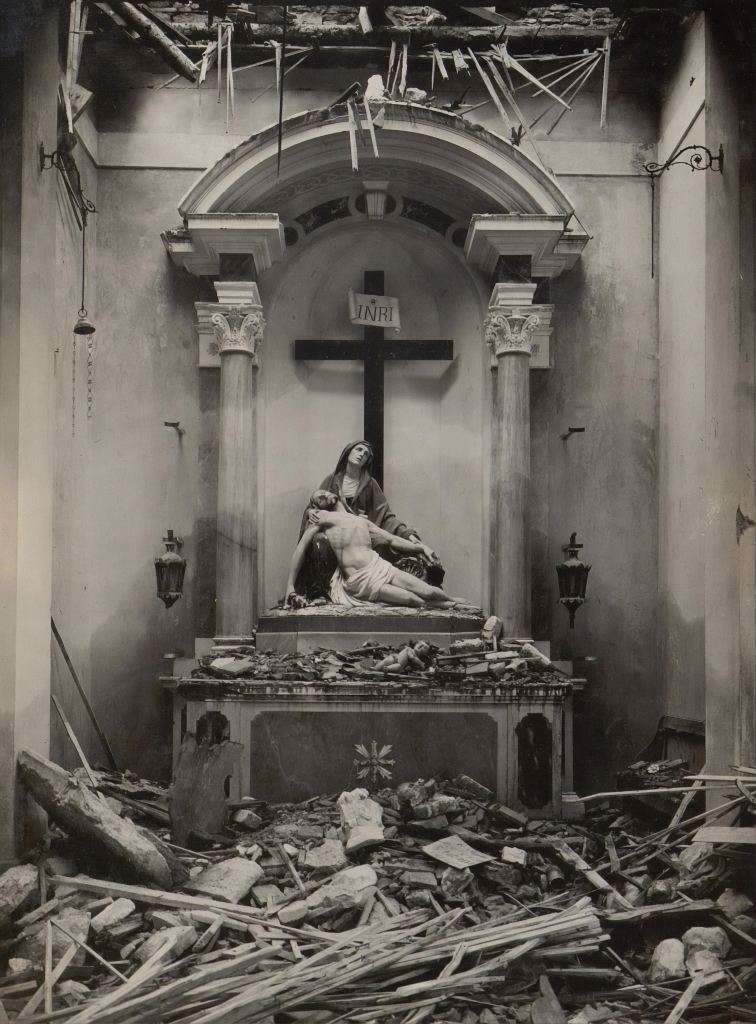
Romans 8:7
“Because the carnal mind is enmity against God; for it is not subject to the law of God, nor indeed can be. So then, those who are in the flesh cannot please God.”
Photo by Austrian National Library on Unsplash
Paul’s words are both clear and direct. The carnal, fleshly mind is enmity against God. In other words, the mind that is set on its own way and is controlled by the passion of selfish desire is opposed to God and hostile toward His law. Those of this mind have set themselves up as His enemies. This is why Paul says that individuals in this state cannot and will not subject themselves to the law of God, because they will not obey, submit, or willingly yield to the instructions of God. Consequently, it is impossible for individuals in this state of mind to please God. We have all been in this state of mind, and if we are honest with ourselves, we will admit that these tendencies are still in us. Even Paul, himself, who served the law of God in his mind and inward man, confessed, saying, “But I see another law in my members, warring against the law of my mind, and bringing me into captivity to the law of sin which is my members” (Romans 7:23). Those who delight in the law of God and, like Paul, seek to serve the law in their minds understand this battle. They are fully aware that the desire of the flesh, the natural man, does not yield so willingly. Every command God plants in our minds, the flesh rails against. Thus, everyday we must seek the strength of the Spirit in order to subject our minds to His law, just as Paul did, as David did, and as Christ did.
When Paul speaks of the carnal mind, it’s necessary to remind ourselves that he is not only referring to unbelievers. Those who profess the faith are also included. Paul wasn’t alone on this. Reading through the prophets, one will find that it was often God’s people who set their minds against God (Jeremiah 6:19; 4:14; Isaiah 65:2). Just as many of the devout Jewish leaders were Jesus’ most vehement opposers, so those who bear His name can be as well. How does this happen? When we reject the mind of Christ and exalt our own doctrines and traditions above God’s. Many of those who opposed Christ thought they were defending God’s word when they were, in fact, defending their own doctrines and traditions. In Mark 8, Jesus addresses this issue with the so-called religious leaders of His time. After these leaders questioned His disciples about not properly washing their hands, Jesus responds with this indictment:
Mark 7:8-9
“For laying aside the commandment of God, you hold the tradition of men–the washing of pitchers and cups, and many other such things you do… All too well you reject the commandment of God, that you may keep your tradition.”
Jesus was not the first to call out this pattern; there were others before him, including the prophet Isaiah, whom Jesus quotes: “This people honors me with their lips, but their heart is far from Me. And in vain they worship Me, teaching as doctrines the commandments of men” (Mark 7:6-7; Isaiah 29:13). Both Isaiah and Jesus were speaking directly to the people of God. Let us heed their words and not become ignorant. If we possess the mind of Christ, then we will do the works of Christ, and these works are the commandments of God, not the commandments and traditions of men. Even the most devout fail to distinguish between the two. There are many who will stand before Him on the last day and say, “Lord, Lord, have we not prophesied in Your name, cast out demons in Your name, and done many wonders in your name?” And what will His response be? “I never knew you; depart from Me, you who practice lawlessness” (Matthew 7:23). These are tough sayings, but true nonetheless. Attaching Jesus’ name to manmade works, doctrines, traditions, creeds, ministries, and so forth is of no significance if these do not align with the commandments and will of the Father. Jesus did not come to start His own religion, nor did He come to be the poster child for man’s ideals and personal agendas, no matter how sincere and well-intentioned they may be. He came to teach and do the will of the Father, and so must those who profess Him as Lord (Matthew 7:21). This only happens when we listen to His word and let it soak into our minds and hearts. Then, we begin to see and understand His will. Paul teaches this when he instructs the church to “not be conformed to this world, but be transformed by the renewing of your mind, that you may prove what is that good and acceptable and perfect will of God” (Romans 12:2).
Today, there is a battle for our minds and hearts, and not just ours, but the minds, hearts and attention of our succeeding generations. Through social media, Hollywood, the music industry, and even through academia there is siege happening to keep our minds in captivity. The enemy–both physical and spiritual–knows that if our minds can be subdued and entranced, then so can our wills. Thus, the enemy continues to do what he has been doing since the beginning: turning people–God’s people–away from and against the word of God. Why? Because God’s word is the only antidote to deception and lawlessness. Everyday and in every hour, the enemy whispers the same words as he did in the garden: “Did God really say?” These words continue to effectively poison the minds of the vulnerable, the unstable, and the untrained. Yes, his ability to twist and annul the teachings of God is the reason why we are not only seeing our world rapidly decay, but it is also why multitudes continue to walk away from the faith. Even worse, it is why we are even witnessing the moral foundation of so many churches and church goers dissolve into conformity.
All of this will continue to happen unless we learn from the pattern of history. What is this pattern? The further God’s people distance themselves from His law, the more corrupt and degenerate we become. There is, perhaps, not a more pronounced pattern throughout the entirety of the scriptures, and we are now witnessing this pattern in our own times. Jesus warns that it will get worse: “And because lawlessness will abound the love of many will grow cold” (Matthew 24:12). Paul, too, tells us that the mystery of lawlessness is already at work, and those people will be deceived who do not receive the love of the truth, who do not believe the truth, but instead have pleasure in unrighteousness (2 Thessalonians 2:10-12). Jesus and Paul speak what has always been true, that the dissolution of love, truth, and righteousness is directly correlated to the increase of lawlessness. This is certainly true of the unbeliever, but it is also true of those who believe. This is why Jesus and His disciples continuously warn the church. We, too, wander because we forget the source of these things (love, truth, and righteousness):
What is the truth?
His Torah (John 17:17).
What is righteousness?
His Torah (Hebrews 5:14).
What is love?
His Torah (Romans 13:10).
The proliferation of lawlessness will continue the more the Torah is extracted from our personal lives, from our families, from our communities, from the public square, and more so from the pulpit. The church will not and cannot be a beacon of love, righteousness, and truth if it continues to erase, annul, modify, and teach against the very source of these things. If the people of God are to fulfill their calling (1 Peter 2:9), if we are to stem the tide of lawlessness, we must first recognize our own wandering from the Torah. We must collectively pray for God to turn our hearts and minds back toward His word–the source of truth, love, and righteousness. Then, and only then, will we be able to effectively carry out our role as His royal priesthood (Malachi 2:7). Throughout the scriptures, when the people of God experienced this type of revival, they not only experienced God’s rest and healing, they also became a force to be reckoned with.
“The Lord is with you while you are with Him. If you seek Him, He will be found by you; but if you forsake Him, He will forsake you. For a long time Israel has been without the true God, without a teaching priest, and without law; but when in their trouble they turned to the Lord God of Israel, and sought Him, He was found by them… and Judah rejoiced at the oath, for they had sworn with all their heart and sought Him with all their soul; and He was found by them, and the Lord gave them rest all around” (2 Chronicles 15:2-4, 15).
Let This Mind Be In You

“Therefore if there is any consolation in Christ, if any comfort of love, if any fellowship of the Spirit, if any affection and mercy, fulfill my joy by being like-minded, having the same love, being of one accord, of one mind.” -Philippians 2:1-2
Photo by Casey Horner on Unsplash
Isaiah 41:21
“The LORD was pleased for His righteousness’ sake to make the law great and glorious.”
Through Isaiah, God told us long in advance, before He came in the flesh, that He would magnify the law and not do away with it. He was going to make it honorable and not contemptible, as some have made it to be. The law is not solely physical, it’s not legalistic, it’s not contemptible, it’s not for the old people of the past; it is an honorable magnification of the mind and the nature of God. This is the mind of God, and this is His character. This is why God purposed to make it great and glorious, because He wants to share His mind with us, and He will, one day, share His mind with all people (Isaiah 2:3; 54:13). This is the mind of Christ, the mind that God intends for us to have. It is for this reason that He says through the apostle Paul,
Philippians 2:5
“Let this mind be in you which was also in Christ Jesus…”
What kind of mind is God referring to? A lawless or rebellious mind? Obviously not. Christ had a very abiding mind, a disciplined mind, a righteous mind, a holy mind. How do we know? First and foremost, Jesus claimed to be one with the Father, and this is a claim He wouldn’t make unless He was of the same mind, the same heart, and the same understanding as the Father. Jesus indicated this when He said, “My doctrine is not Mine, but His who sent Me” (John 7:16). Elsewhere, He tells his listeners that He speaks those things which he hears from the Father, does only those things that have been taught to Him by the Father, and He always does what pleases the Father (John 8:26-29). All of these indicate that His mind and His will were in lockstep with the Father. This is the mind that Paul commands us to have in ourselves, a mind that is set on the things above (Colossians 3:1-2). Psalm 1 is a perfect description of this mind: “But his delight is in the law of the Lord, and in His law He meditates day and night” (Psalm 1:2). This is what it means to love the Lord with all of our minds–to think continually upon His word, and to ask God in the words of David to “open my eyes, that I may see wondrous things from your law… Give me understanding, and I shall keep your law; indeed, I shall observe it with my whole heart” (Psalm 119:18, 34). This was not only David’s prayer, but it was Paul’s prayer for the church. In like manner, he prays that,
“You (we) may be filled with the knowledge of His will in all wisdom and spiritual understanding; that you may walk worthy of the Lord, fully pleasing Him, being fruitful in every good work and increasing in the knowledge of God…” (Colossians 1:9-10).
Sadly, many of the apostle Paul’s own brethren accused him of not worshipping according to the law and steering others away as well (Acts 18:13). Was this truly the case? Would a teacher of the Torah instruct us to have the same mind as Christ and not aim to have this mind in himself? What was Paul’s response to all of this? In Romans 7, Paul gladly proclaims, “I delight in the law according to the inward man,” and “with the mind I myself serve the law of God…” (7:22, 25). Paul, like David, proclaimed his delight in the law of God and even professes to serve the law of God in His mind. Elsewhere, Paul confirms this saying, “according to the Way which they call a sect, so I worship the God of my fathers, believing all things which are written in the law and in the Prophets” (Acts 24:14). Paul’s aim, like that of our Master, was to please the Father. This begins with knowing His mind, His heart, His will, and then striving to have this mind in ourselves. This is what pleases the Father–when we think His thoughts and grow in His understanding. On the other hand, it is difficult to please the Father when we are not filled with these things. Therefore, as His servants we must offer up our minds that they may undergo the transformation process, the process of allowing His Spirit–through reading, through study, through prayer, through meditation, and through obedience–to engrave His word in our minds. This has been the process since the beginning. In the Shema, for example, God’s people are instructed to take God’s word and,
“…teach them diligently to your children, and shall talk of them when you sit in your house, when you walk by the way, when you lie down, and when you rise up. You shall bind them as a sign on your hand, and they shall be frontlets between your eyes. You shall write them on the doorposts of your house and upon your gates” (Deuteronomy 6:7-8).
The Shema is the instruction, the prayer, that teaches our children, that teaches us, what it means to pursue the mind of Christ–how to nurture it, to grow it, and to make it our nature. It is not just reading and meditating, but the Shema reminds us that God’s word must become the substance of our conversations and our relationships. In binding His instructions to our hands and upon our foreheads, the word becomes the motivation for our work and the lens through which we see the world, see others, and see God. This is the process by which God is writing His word upon us and in us. The more it is inscribed on our minds and hearts, the more it becomes the lens through which we interact with creation and the standard by which we govern every facet of our lives–our households, our communities, and our cities, our nation. The Shema is a powerful reminder that God’s intention, from the beginning, was for His instructions to be written in our hearts and minds. Yes, His will has always been to write the mind of Christ in us, but human history has proven the apostle Paul right when he says that “the carnal mind is enmity against God; for it is not subject to the law of God, nor indeed can be…” (Romans 8:7). The issue has never been the words that God intends to inscribe in our hearts and minds; the issue has always been the carnal state of the human heart and mind. Paul confirms this when says, “the law is holy, and the commandment holy, just, and good,” and that “the law is spiritual, but I am carnal, sold under sin” (Romans 7:12, 14).
When we read the apostles words, we must understand, then, that Jesus came, not to abolish or destroy the law, nor did He come to rescue us from the law itself, but He came to release us from this bondage that came by transgressing His law. This is just the beginning. He also initiated the process of removing the heart of stone and renewing the carnal mind in order to make them fully receptive to His law. The giving of God’s Spirit is the continuation of this process until Christ returns to see it through to completion. All of this has been given to us and is being done in us by God for this very purpose: “I will put My law in their minds, and write it on their hearts,” and “to cause you to walk in My statutes, and you will keep My judgments” (Jeremiah 31:33; Ezekiel 36:27). In the end, when the process is completed, God tells us through the prophet Jeremiah that “No more shall every man teach his neighbor, and every man his brother, saying, ‘know the Lord,’ for they shall all know Me, from the least of them to the greatest of them” (31:34). Until then, we diligently continue–guided by His Spirit and His word–to encourage and teach one another toward this end:
Philippians 2:5
“Let this mind be in you which was also in Christ Jesus…”
 Torah Discovery