The Bible
The Sabbath: An Invitation to Rest

Genesis 2:2-3
“And by the seventh day God completed His work which He had done; and He rested on the seventh day from all His work which He had done. Then God blessed the seventh day and sanctified it, because in it He rested from all His work which God had created and made.”
Photo by Jessica Delp on Unsplash
God sanctified this day and not any other day because on it He rested from all of His work and what He made. This is clearly pointing our attention toward what God did and not what man is doing. It is His work, it is His day, it is His creation; He did it and sanctified it. Therefore, it is up to us to keep this day, and no other day, as holy. On this day, God rested from all of His works because creation was finished. When God saw everything that He had made, He called it very good. Why? Because it was perfect. Everything was as it should be, and it all functioned in perfect harmony according to His will. Therefore, the seventh day–the day sanctified by God–is a sign of this completion, of this perfection. On this day, we acknowledge and worship the One by Whom “all things were created and that are on earth, visible and invisible, whether thrones or dominions or principalities or powers. All things were created through Him and for Him. And He is before all things, and in Him all things exist”(Colossians 1:15-17). Yes, on this sanctified day, we cease from our work and worship the One Who existed before us, through Whom we came into existence, and by Whom we are being renewed in His likeness. Shabbat is a sacred reminder, a covenant, “a sign between Me and you throughout your generations, that you may know that I am the Lord who sanctifies you”(Exodus 31:13). On this holy day, we also cease from our works to recall and celebrate this covenant, which reminds us that He is the author and perfecter of creation. This covenant also assures us that just as He completed creation in the beginning, He will once again bring it back to perfection. We find rest knowing that–even though we are surrounded by chaos and darkness–we stand in the presence of Him who separated the light from the darkness, who spoke and transformed the chaos to order. One day a week He calls us to set aside the work of our own hands, to step out from the chaos, so that we are reminded that the God who formed us from the dust and breathed life into us is the One who alone sustains us–not our jobs, not our entertainment, not our pleasures, not the work of our own hands, and not our human relationships.
Therefore, on this day we seek out this rest by deliberately separating ourselves from everything that consumes our time, our energy, and our attention. Six days a week, we are compelled to meet the demands of our taskmasters–be they physical or spiritual–but on this holy day, God invites us to separate ourselves from these, and we eagerly do so, knowing that it is the Creator, not the creation, that restores us, fills us, feeds us, sustains us, and gives us rest all around. Not only are we compelled to meet the weekly demands or our taskmasters, but we voluntarily fill up any spare moments with additional pursuits, pleasures, and obligations. By His goodness, God grants us the freedom and the time to pursue these pleasures and fulfill these obligations. Six days a week we spin, toil, build, and pursue, but on the seventh He commands us to cease. Why a command? Because He knows that we are creatures driven by success and accomplishment, which are not evil in and of themselves, but left unbridled, easily become the sole objects of our attention and worship. The Creator knows His creation, how easily we are seduced by ambition and enslaved by addiction–addiction to work, pleasure, and busyness. We are so consumed by such things that we are constantly driving ourselves, each other, and creation into exhaustion, illness, and spiritual depravity. Consequently, this leads us deeper into addiction, deeper into the feedback loop of despair. It is because of this that Paul writes,
Romans 8:22-23
“For we know that the whole creation groans and labors with birth pangs together until now. Not only that, but we also who have the firstfruits of the Spirit, even we ourselves groan within ourselves…”
This is where we find ourselves today. We appear to be more advanced than any other civilization in history, seemingly closer to the pinnacle of innovation than we ever imagined, but at what cost? We are “progressing” quicker than we can keep up, and the more we accomplish the more this insatiable desire to have more spreads like cancer. Has all this innovation made us better human beings? Look around. Depression, anxiety, and other metal health issues appear to be on the rise and are beginning to manifest themselves in new ways. Across the internet these issues are even being celebrated and normalized. We are at war with ourselves and with each other. Violence is becoming the norm, and even if we are not directly affected by it, we seem to be growing increasingly numb to its presence. Even as we become more impacted by this, as we feel ourselves and the fabric of our societies unraveling each day, we refuse to stop. We push forward under the delusion that if we just work harder, we will find the holy grail we have all been desperately seeking after: rest. Yet the more we distance ourselves from our Maker, from the One who is the Lord of the Sabbath, the farther we find ourselves from what our souls desperately need, and that is His rest. Jesus also witnessed this depravity amongst His own brethren, which is why we hear Him extend the following invitation to rest:
Matthew 11:28-30
“Come to Me, all you who labor and are heavy laden, and I will give you rest. Take My yoke upon and learn from Me, for I am gentle and lowly in heart, and you will find rest for your souls. For My yoke is easy and My burden is light.”
The Lord of the Sabbath has come to this earth to extend His invitation, or better yet, to reestablish His command to rest. “Come,” He says, because He is inviting us, calling us to rise up and join Him. He does not say, “I will come to you when it is convenient for you, when you can fit Me in your schedule, or on a day you set apart for yourself.” No, He says “come to Me,” because He is inviting us into His sanctified space and time, a time established and set apart by Him and the Father in the beginning. He is Lord of the Sabbath, because He initiated this time, and He was the first to rest from His work and to be refreshed on this day (Exodus 31:17). Now He invites us to do as He did… to do as He does. Hebrews tells us that, “There remains therefore a rest for the people of God. For he who has entered His rest has himself also ceased from his works as God did from His”(Hebrews 4:9).
He is the One who invites us to willingly cease from our own labors, from our wearisome efforts and the daily toiling, so that He might sustain us physically, emotionally, and spiritually. Ultimately, this time is when we find relief and refreshing from the curse that has plagued mankind since being expelled from the Garden. Since that time, man and woman have been plagued and wearied by enmity, strife, sorrow, pain, unfulfilled desire, subjection, endless toil filled with thorns, thistles, and sweat (Genesis 3:15-19). All of these terms are used to describe humanity’s existence since being ousted from the Garden, ousted from God’s rest. Now, Jesus is calling us to return to the Garden, to the time of Rest that was and will once again be. Until then, we are invited weekly to experience this rest, this sanctified time, this separation from the world and all its demands.
So, Jesus invites us to “come and take.” Take what? He says to take His yoke upon ourselves and learn from Him. This is what Sabbath is, a time of refreshing and of learning. It is not a time of sitting around and waiting for time to pass, as many believe it to be. On this day we cease from our works and open ourselves to His work. We open ourselves so that He might first do His work in us, then we learn from Him how to do the work. This may seem confusing because the Sabbath is about resting, so how can we be working? On one Sabbath, Jesus was persecuted by His own people for supposedly breaking the Sabbath by healing a man who had been sick for thirty-eight years. What was Jesus’ response to their accusations? “My Father has been working until now, and I have been working”(John 5:17). He tells them He has been working all along. On Sabbath, Jesus has and continues to do the work of the Father. He was not doing His own work, out earning His own paycheck; nor was pursuing His own pleasure, taking the day off to get a round of golf in. He was not working in this manner. What exactly, then, was He doing? He was healing, He was feeding, He was worshipping, He was teaching, He was restoring, He was doing good. In other words, He was removing the yoke of physical and spiritual oppression from people’s lives, and giving them rest. Throughout the Torah, the command to rest includes ensuring others enjoy God’s rest as well. He intentionally did these things on the Sabbath to shake up what Sabbath had become. For many, Sabbath had become a prison. Those who were in power, who held the monopoly on religious practice, were able to rest, while the rest of God’s people were suffering. Therefore, Jesus performed miracles to remind the people of what the Sabbath was and still is: a day in which ALL of God’s people ought to be refreshed and given opportunity to rest. This is what it was, and this is what it will be in the future –a time of healing, of restoring, of teaching, of worshipping, a time of removing–once and for all–the yoke of oppression from our necks, from our bodies, and from our souls. This is the “work” of the Sabbath.
Therefore, we come to Him on this day, setting aside everything so that we can first experience this healing, this lifting of the yoke, this rest in our own lives. Then, like Jesus, we learn from the Father how to engage in this work ourselves. After replying to His accusers about He and the Father working, Jesus then said to them, “Most assuredly, I say to you, the Son can do nothing of Himself, but what He sees the Father do; for whatever He does, the Son does in like manner. For the Father loves the Son, and shows Him all things that He Himself does”(5:19-20). Once we experience the rest given through Sabbath, we learn to do what the Father is doing, just as Christ did and continues to do. In fact, Jesus takes us to Himself and teaches us. This is why Jesus invites us to learn from Him. He teaches us what it means to rest, but He also models what it means to do the work of the Father, which is to lead the world to rest.
The Fight Against Lawlessness Must Begin in the Church
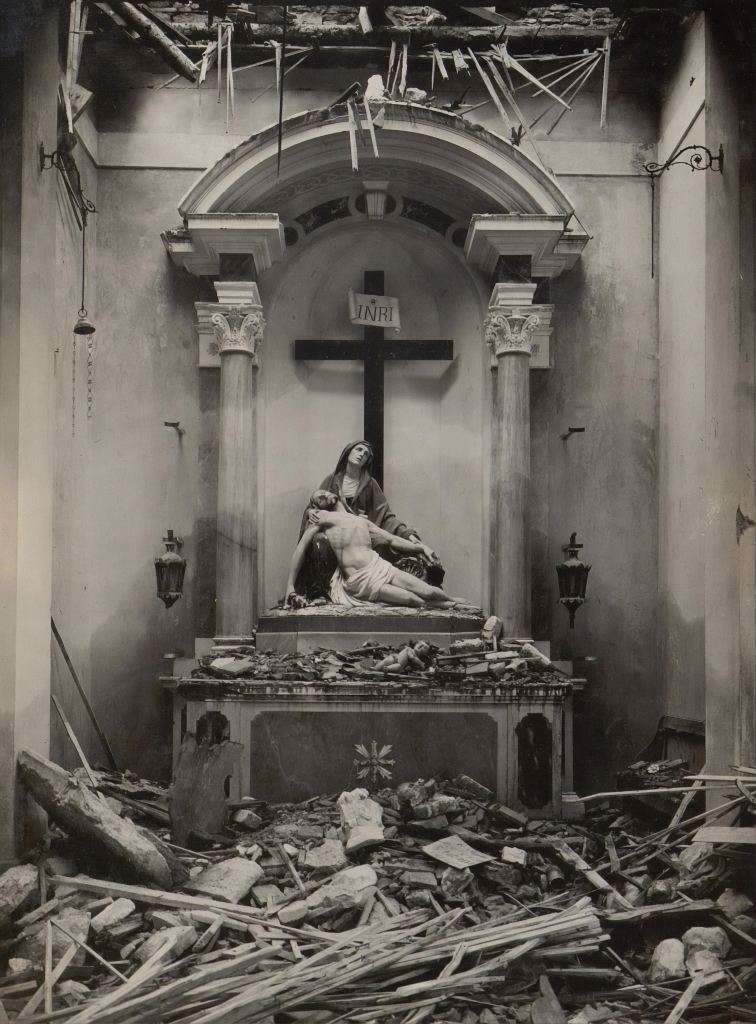
Romans 8:7
“Because the carnal mind is enmity against God; for it is not subject to the law of God, nor indeed can be. So then, those who are in the flesh cannot please God.”
Photo by Austrian National Library on Unsplash
Paul’s words are both clear and direct. The carnal, fleshly mind is enmity against God. In other words, the mind that is set on its own way and is controlled by the passion of selfish desire is opposed to God and hostile toward His law. Those of this mind have set themselves up as His enemies. This is why Paul says that individuals in this state cannot and will not subject themselves to the law of God, because they will not obey, submit, or willingly yield to the instructions of God. Consequently, it is impossible for individuals in this state of mind to please God. We have all been in this state of mind, and if we are honest with ourselves, we will admit that these tendencies are still in us. Even Paul, himself, who served the law of God in his mind and inward man, confessed, saying, “But I see another law in my members, warring against the law of my mind, and bringing me into captivity to the law of sin which is my members” (Romans 7:23). Those who delight in the law of God and, like Paul, seek to serve the law in their minds understand this battle. They are fully aware that the desire of the flesh, the natural man, does not yield so willingly. Every command God plants in our minds, the flesh rails against. Thus, everyday we must seek the strength of the Spirit in order to subject our minds to His law, just as Paul did, as David did, and as Christ did.
When Paul speaks of the carnal mind, it’s necessary to remind ourselves that he is not only referring to unbelievers. Those who profess the faith are also included. Paul wasn’t alone on this. Reading through the prophets, one will find that it was often God’s people who set their minds against God (Jeremiah 6:19; 4:14; Isaiah 65:2). Just as many of the devout Jewish leaders were Jesus’ most vehement opposers, so those who bear His name can be as well. How does this happen? When we reject the mind of Christ and exalt our own doctrines and traditions above God’s. Many of those who opposed Christ thought they were defending God’s word when they were, in fact, defending their own doctrines and traditions. In Mark 8, Jesus addresses this issue with the so-called religious leaders of His time. After these leaders questioned His disciples about not properly washing their hands, Jesus responds with this indictment:
Mark 7:8-9
“For laying aside the commandment of God, you hold the tradition of men–the washing of pitchers and cups, and many other such things you do… All too well you reject the commandment of God, that you may keep your tradition.”
Jesus was not the first to call out this pattern; there were others before him, including the prophet Isaiah, whom Jesus quotes: “This people honors me with their lips, but their heart is far from Me. And in vain they worship Me, teaching as doctrines the commandments of men” (Mark 7:6-7; Isaiah 29:13). Both Isaiah and Jesus were speaking directly to the people of God. Let us heed their words and not become ignorant. If we possess the mind of Christ, then we will do the works of Christ, and these works are the commandments of God, not the commandments and traditions of men. Even the most devout fail to distinguish between the two. There are many who will stand before Him on the last day and say, “Lord, Lord, have we not prophesied in Your name, cast out demons in Your name, and done many wonders in your name?” And what will His response be? “I never knew you; depart from Me, you who practice lawlessness” (Matthew 7:23). These are tough sayings, but true nonetheless. Attaching Jesus’ name to manmade works, doctrines, traditions, creeds, ministries, and so forth is of no significance if these do not align with the commandments and will of the Father. Jesus did not come to start His own religion, nor did He come to be the poster child for man’s ideals and personal agendas, no matter how sincere and well-intentioned they may be. He came to teach and do the will of the Father, and so must those who profess Him as Lord (Matthew 7:21). This only happens when we listen to His word and let it soak into our minds and hearts. Then, we begin to see and understand His will. Paul teaches this when he instructs the church to “not be conformed to this world, but be transformed by the renewing of your mind, that you may prove what is that good and acceptable and perfect will of God” (Romans 12:2).
Today, there is a battle for our minds and hearts, and not just ours, but the minds, hearts and attention of our succeeding generations. Through social media, Hollywood, the music industry, and even through academia there is siege happening to keep our minds in captivity. The enemy–both physical and spiritual–knows that if our minds can be subdued and entranced, then so can our wills. Thus, the enemy continues to do what he has been doing since the beginning: turning people–God’s people–away from and against the word of God. Why? Because God’s word is the only antidote to deception and lawlessness. Everyday and in every hour, the enemy whispers the same words as he did in the garden: “Did God really say?” These words continue to effectively poison the minds of the vulnerable, the unstable, and the untrained. Yes, his ability to twist and annul the teachings of God is the reason why we are not only seeing our world rapidly decay, but it is also why multitudes continue to walk away from the faith. Even worse, it is why we are even witnessing the moral foundation of so many churches and church goers dissolve into conformity.
All of this will continue to happen unless we learn from the pattern of history. What is this pattern? The further God’s people distance themselves from His law, the more corrupt and degenerate we become. There is, perhaps, not a more pronounced pattern throughout the entirety of the scriptures, and we are now witnessing this pattern in our own times. Jesus warns that it will get worse: “And because lawlessness will abound the love of many will grow cold” (Matthew 24:12). Paul, too, tells us that the mystery of lawlessness is already at work, and those people will be deceived who do not receive the love of the truth, who do not believe the truth, but instead have pleasure in unrighteousness (2 Thessalonians 2:10-12). Jesus and Paul speak what has always been true, that the dissolution of love, truth, and righteousness is directly correlated to the increase of lawlessness. This is certainly true of the unbeliever, but it is also true of those who believe. This is why Jesus and His disciples continuously warn the church. We, too, wander because we forget the source of these things (love, truth, and righteousness):
What is the truth?
His Torah (John 17:17).
What is righteousness?
His Torah (Hebrews 5:14).
What is love?
His Torah (Romans 13:10).
The proliferation of lawlessness will continue the more the Torah is extracted from our personal lives, from our families, from our communities, from the public square, and more so from the pulpit. The church will not and cannot be a beacon of love, righteousness, and truth if it continues to erase, annul, modify, and teach against the very source of these things. If the people of God are to fulfill their calling (1 Peter 2:9), if we are to stem the tide of lawlessness, we must first recognize our own wandering from the Torah. We must collectively pray for God to turn our hearts and minds back toward His word–the source of truth, love, and righteousness. Then, and only then, will we be able to effectively carry out our role as His royal priesthood (Malachi 2:7). Throughout the scriptures, when the people of God experienced this type of revival, they not only experienced God’s rest and healing, they also became a force to be reckoned with.
“The Lord is with you while you are with Him. If you seek Him, He will be found by you; but if you forsake Him, He will forsake you. For a long time Israel has been without the true God, without a teaching priest, and without law; but when in their trouble they turned to the Lord God of Israel, and sought Him, He was found by them… and Judah rejoiced at the oath, for they had sworn with all their heart and sought Him with all their soul; and He was found by them, and the Lord gave them rest all around” (2 Chronicles 15:2-4, 15).
Let This Mind Be In You

“Therefore if there is any consolation in Christ, if any comfort of love, if any fellowship of the Spirit, if any affection and mercy, fulfill my joy by being like-minded, having the same love, being of one accord, of one mind.” -Philippians 2:1-2
Photo by Casey Horner on Unsplash
Isaiah 41:21
“The LORD was pleased for His righteousness’ sake to make the law great and glorious.”
Through Isaiah, God told us long in advance, before He came in the flesh, that He would magnify the law and not do away with it. He was going to make it honorable and not contemptible, as some have made it to be. The law is not solely physical, it’s not legalistic, it’s not contemptible, it’s not for the old people of the past; it is an honorable magnification of the mind and the nature of God. This is the mind of God, and this is His character. This is why God purposed to make it great and glorious, because He wants to share His mind with us, and He will, one day, share His mind with all people (Isaiah 2:3; 54:13). This is the mind of Christ, the mind that God intends for us to have. It is for this reason that He says through the apostle Paul,
Philippians 2:5
“Let this mind be in you which was also in Christ Jesus…”
What kind of mind is God referring to? A lawless or rebellious mind? Obviously not. Christ had a very abiding mind, a disciplined mind, a righteous mind, a holy mind. How do we know? First and foremost, Jesus claimed to be one with the Father, and this is a claim He wouldn’t make unless He was of the same mind, the same heart, and the same understanding as the Father. Jesus indicated this when He said, “My doctrine is not Mine, but His who sent Me” (John 7:16). Elsewhere, He tells his listeners that He speaks those things which he hears from the Father, does only those things that have been taught to Him by the Father, and He always does what pleases the Father (John 8:26-29). All of these indicate that His mind and His will were in lockstep with the Father. This is the mind that Paul commands us to have in ourselves, a mind that is set on the things above (Colossians 3:1-2). Psalm 1 is a perfect description of this mind: “But his delight is in the law of the Lord, and in His law He meditates day and night” (Psalm 1:2). This is what it means to love the Lord with all of our minds–to think continually upon His word, and to ask God in the words of David to “open my eyes, that I may see wondrous things from your law… Give me understanding, and I shall keep your law; indeed, I shall observe it with my whole heart” (Psalm 119:18, 34). This was not only David’s prayer, but it was Paul’s prayer for the church. In like manner, he prays that,
“You (we) may be filled with the knowledge of His will in all wisdom and spiritual understanding; that you may walk worthy of the Lord, fully pleasing Him, being fruitful in every good work and increasing in the knowledge of God…” (Colossians 1:9-10).
Sadly, many of the apostle Paul’s own brethren accused him of not worshipping according to the law and steering others away as well (Acts 18:13). Was this truly the case? Would a teacher of the Torah instruct us to have the same mind as Christ and not aim to have this mind in himself? What was Paul’s response to all of this? In Romans 7, Paul gladly proclaims, “I delight in the law according to the inward man,” and “with the mind I myself serve the law of God…” (7:22, 25). Paul, like David, proclaimed his delight in the law of God and even professes to serve the law of God in His mind. Elsewhere, Paul confirms this saying, “according to the Way which they call a sect, so I worship the God of my fathers, believing all things which are written in the law and in the Prophets” (Acts 24:14). Paul’s aim, like that of our Master, was to please the Father. This begins with knowing His mind, His heart, His will, and then striving to have this mind in ourselves. This is what pleases the Father–when we think His thoughts and grow in His understanding. On the other hand, it is difficult to please the Father when we are not filled with these things. Therefore, as His servants we must offer up our minds that they may undergo the transformation process, the process of allowing His Spirit–through reading, through study, through prayer, through meditation, and through obedience–to engrave His word in our minds. This has been the process since the beginning. In the Shema, for example, God’s people are instructed to take God’s word and,
“…teach them diligently to your children, and shall talk of them when you sit in your house, when you walk by the way, when you lie down, and when you rise up. You shall bind them as a sign on your hand, and they shall be frontlets between your eyes. You shall write them on the doorposts of your house and upon your gates” (Deuteronomy 6:7-8).
The Shema is the instruction, the prayer, that teaches our children, that teaches us, what it means to pursue the mind of Christ–how to nurture it, to grow it, and to make it our nature. It is not just reading and meditating, but the Shema reminds us that God’s word must become the substance of our conversations and our relationships. In binding His instructions to our hands and upon our foreheads, the word becomes the motivation for our work and the lens through which we see the world, see others, and see God. This is the process by which God is writing His word upon us and in us. The more it is inscribed on our minds and hearts, the more it becomes the lens through which we interact with creation and the standard by which we govern every facet of our lives–our households, our communities, and our cities, our nation. The Shema is a powerful reminder that God’s intention, from the beginning, was for His instructions to be written in our hearts and minds. Yes, His will has always been to write the mind of Christ in us, but human history has proven the apostle Paul right when he says that “the carnal mind is enmity against God; for it is not subject to the law of God, nor indeed can be…” (Romans 8:7). The issue has never been the words that God intends to inscribe in our hearts and minds; the issue has always been the carnal state of the human heart and mind. Paul confirms this when says, “the law is holy, and the commandment holy, just, and good,” and that “the law is spiritual, but I am carnal, sold under sin” (Romans 7:12, 14).
When we read the apostles words, we must understand, then, that Jesus came, not to abolish or destroy the law, nor did He come to rescue us from the law itself, but He came to release us from this bondage that came by transgressing His law. This is just the beginning. He also initiated the process of removing the heart of stone and renewing the carnal mind in order to make them fully receptive to His law. The giving of God’s Spirit is the continuation of this process until Christ returns to see it through to completion. All of this has been given to us and is being done in us by God for this very purpose: “I will put My law in their minds, and write it on their hearts,” and “to cause you to walk in My statutes, and you will keep My judgments” (Jeremiah 31:33; Ezekiel 36:27). In the end, when the process is completed, God tells us through the prophet Jeremiah that “No more shall every man teach his neighbor, and every man his brother, saying, ‘know the Lord,’ for they shall all know Me, from the least of them to the greatest of them” (31:34). Until then, we diligently continue–guided by His Spirit and His word–to encourage and teach one another toward this end:
Philippians 2:5
“Let this mind be in you which was also in Christ Jesus…”
Christ: The End of the Law

Romans 10:4-6
“For Christ is the end of the law for righteousness to everyone who believes.”
Photo by Nick Fewings on Unsplash
Prior to entering the Promised Land, Moses reminds the people that it is not on account of their own righteousness or their accomplishments that they are entering the land. In fact, it was just the opposite. They were an obstinate people who continuously refused to obey; thus, Moses made it clear that it was solely God’s goodness, His grace, and His promise to their fathers that He was bringing them into the land: “understand that the Lord your God is not giving you this good land to possess because of your righteousness, for you are a stiff-necked people” (Deuteronomy 9:6). Similarly, God has delivered us and has granted us passage through the narrow gate and along the narrow path, not by our own merit or righteousness, but by the mercy and grace bestowed upon us through Jesus Christ. It is through Christ that we are deemed righteous (right before God) or justified before Him in order to travel the narrow path, the path of life. When we stand at the trailhead of life, we understand that there is no other way to begin the journey but through Christ. How does one arrive at this realization? He looks intently into the royal law and realizes that because of his transgression against the law, there is no righteousness in him to appeal to, only sin and condemnation. In this sense, the law leads us to Christ, for His sacrifice is the only means of finding forgiveness and reconciliation. Once we have been granted these through faith, then our journey down the narrow path begins.
Many have fallen into error believing that once we begin this journey, that the law is no longer of use. In fact, many take Paul’s words in Romans 10 (and elsewhere) to mean that the law is not only obsolete but is now a curse to anyone who attempts to live by it. Is this what Paul meant when he said that Christ is the end of the law? Is this what Moses, the prophets, or even Christ taught us? Moses tells Israel that “the Lord commanded us to observe all these statutes, to fear the Lord our God, for our good always, that He might preserve us alive, as it is this day. Then it will be righteousness for us, if we are careful to observe these commandments before the Lord our God, as He commanded us” (Deuteronomy 6:24-25). Though Israel possessed no righteousness in and of themselves when God brought them out of Egypt and into the promised land, God brought them out of Egypt and into the wilderness for this reason–to train them up in righteousness. The same holds true today. God delivers us by His mercy, then leads us into the training grounds of the wilderness for this purpose: “And you shall remember that the Lord your God led you all the way these forty years in the wilderness, to humble you and test you, to know what was in your heart, whether you would keep His commandments or not” (Deuteronomy 8:2). Even Jesus, who was righteous, had to undergo this process–being baptized and tested in the wilderness– in order to fulfill all manner of righteousness (Matthew 3:15). God wants to know what is in our hearts, to know if our resolve is to live righteously and be holy as He is holy. This is all part of our journey down the narrow path; this is what it means to be born into and grow up in the family of God.
1 John 2:29
“If you know that He is righteous, you know that everyone who practices righteousness is born of Him.”
Romans 6:19
“For just as you presented your members as slaves of uncleanness, and of lawlessness leading to more lawlessness, so now present your members as slaves to righteousness for holiness.”
Our acceptance into life begins with Christ, and our journey down the narrow path ends with Christ. In other words, the purpose of our journey is to look and be like Christ. This has always been the end or the goal, and it is for this reason that Christ even traveled among Israel in the wilderness (1 Corinthians 10:3). This is what is meant by “Christ is the end of the Law.” Now the “end” itself has a sense of termination like, “we have reached the end of the road.” Or, when we speak of the end, we take it it to mean that something has ceased to exist. But is this what this means? Let us also consider that the Greek word also means the end in terms of a goal. In that sense, Christ is our goal, and He is the goal to which the Torah–and all instruction–leads. He is what God will produce in us through each and every one of His words and commands. This is why Christ said in both Deuteronomy and Matthew that man should live by EVERY word that comes from the mouth of God. It is for this purpose that, on path of life, God feeds us His Torah, so we become like Christ. Likewise, when we gaze into the mirror, or the “perfect law of liberty” as James calls it, the reflection we see is Christ. He is the image of righteousness that the Torah leads to and ought to produce. Why? Because He lived it perfectly, and now through God’s word and Spirit, He trains us up to do and be the same:
2 Timothy 3:16-17
“All Scripture is given by inspiration of God, and is profitable for doctrine, for reproof, for correction, for instruction in righteousness, that the man of God may be complete, thoroughly equipped for every good work.”
The Torah of God is not done away with, rather, it is fulfilling that for which it was designed: instruction in righteousness. Paul says that this instruction will make us complete, and what does complete look like? Like Christ. So, not only does the the law lead us to repentance in Christ and the outset of our journey, but it is further used by God to help us reach our goal which, according to Paul, is for us to “attain the unity of faith, and of the knowledge of God, to a mature man, to the measure of the stature which belongs to the fullness of Christ” (Ephesians 4:12-13). The end of the law is when we reach the mature man and, and through His guidance, obtain the measure of the stature which belongs to the fullness of Christ. Finally, it is for this reason that Jesus said that the law and the prophets are not destroyed or annulled, but have been fulfilled. Jesus came to fulfill the aspects of the law that have led to our redemption and reconciliation, but He has also come to model for us what a Torah-centered life looks like so it, through His grace and help, can be fulfilled in us–both physically and spiritually. The life of Jesus demonstrates how to go about completing the righteous training God requires, and that is to live by every word. It was Jesus who said, “Whoever therefore breaks one of the least of these commandments, and teaches men so, shall be called least in the kingdom of heaven; but whoever does and teaches them, he shall be called great in the kingdom of heaven” (Matthew 5:19). Why every commandment, even the least of them? Because every jot and tittle was given to us to fulfill God’s end in us: to be exactly like Christ.
1 John 2:6
“He who says He abides in Him ought also Himself to walk as He walked.”
Torah: The Path to Life

Life is filled with choices, and we know that many of these choices determine who we become and what becomes of us. Many of the fundamental decisions we make are difficult ones and are often depicted in story and art by travelers standing before diverging paths, faced with the task of choosing just one to travel. In his famous poem, The Road Not Taken, Robert Frost penned the famous words, “Two roads diverged in a wood, and I–I took the one less traveled by and that has made all the difference1.” Among other things, Frost highlights what seems to be a universal truth or experience, namely that the difficult choices, the ones that are filled with challenge and uncertainty, are often the ones that, in the end, lead to self-actualization and fulfillment. This is a truth that also rings true in the scriptures. Throughout the narrative of the scriptures, God’s people–and all of humanity for that matter– are confronted by two diverging roads, roads that were first described by Moses in Deuteronomy:
Deuteronomy 30:19-20:
“I call heaven and earth to witness against you today, that I have set before you life and death, the blessing and the curse. So choose life in order that you may live, you and your descendants…by loving the LORD your God, by obeying His voice, and by holding fast to Him; for this is your life and the length of your days, that you may live in the land which the LORD swore to your fathers, to Abraham, Isaac, and Jacob, to give them.”
In the New Testament, Jesus presents the same two roads in His Sermon on the Mount:
Matthew 7:13
“Enter through the narrow gate; for the gate is wide and the way is broad that leads to destruction, and there are many who enter through it. Because narrow is the gate and difficult is the way which leads to life, and there are few who find it.”
From the beginning of our days, humanity has been traveling these paths. Sadly, as Jesus Christ points out, most of humanity has been traveling the broad way, the way of destruction, the one that leads to death and not to life. Even we ourselves have traveled this road from time to time and have had our share in the way of destruction. It should give us pause when we consider that the broad way, the way of destruction is the one that is favored and most traveled. What is this path and why would any individual choose to walk it if its end is destruction? This is the path that takes us into the depths of the mind of Satan; it is the path of chaos, disorder, and destruction, but it is cloaked in convenience, pleasure, and expediency. This is why it is so enticing. This is the path that Jesus calls us to avoid, the path Moses calls the way of death, and what Paul later describes as the law or way of the flesh.
The other journey takes us, so to speak, through the highways, the mountains, the valleys of the mind of God. This journey takes us through the law of God, or as it is called in Hebrew, the Torah. This way takes us along the path of life and this is the narrow road, and according to Jesus, only a few find it. Why only a few? Because the way is difficult. To travel this path, we must, first and foremost, surrender our lives to Christ, put to death the deeds of the flesh–which are contrary to the law–and allow Christ to rebuild our nature through His Torah (truth) and through the Spirit of Truth. In fact, when Jesus prayed for His followers He asked the Father to “Sanctify them by Your truth. Your word is truth” (John 17:17), and of the Spirit, Jesus promised: “When He, the Spirit of truth, has come He will guide you into all truth…” (John 16:13). This is the path of life… the path of truth, and the two sources from which we receive truth are God’s Torah and His Spirit. It is not enough to read and know the truth, but we must be immersed in and sanctified by the truth in order to travel the path of life. This sanctification process is carried out by the Spirit, who brings to life the words and spiritual meanings within the Torah, using these to lead us through the depths of God’s mind, His nature, and His character. Through this process we are transformed more and more into the image of God and likeness of Jesus Christ, who is the pure embodiment of Spirit and Truth.
Thus, the Torah of God is far more than what people think of when they talk about the law of God. Most of our understanding of the law has been formed from what we have today. The normal laws that we are used to living by are filled with a bunch of do’s and don’ts—red light means stop and green light means go. There is nothing spiritual about it. They are meant to keep harmony, but if we do not have them there will be chaos and disorder. God’s law is also designed to establish order, but it is also so much more than that; when we talk about the law of God, again, we are talking about experiencing the mind of God, the nature of God, the personality of God, the character of God. His law, because it is spiritual, reveals the essence of who He is. This is the primary reason why we seek to understand the law from His perspective, because it not only communicates what He expects from us, but how He feels about us, what He thinks about us, and His intentions for all creation. It is one of the primary ways He communicates Himself with us.
Another reason our understanding of the law is necessary is because God is creating man in His own likeness and in His own image. He is duplicating himself, duplicating His nature and character in us, and He has chosen to do it through His law. His law is spiritual; His law is a living thing. He delivers this law through the one who would later be called the Logos–Jesus Christ. He not only had the Truth, but He is the Truth, He is the Way, He is the Path to eternity, and He is the Destination toward which we travel. It is through the Logos, that we see and understand what the duplicating process consists of and the end to which it leads. We must go through Him, and through Him means to absorb His mind and His nature and His character. He said you must eat my flesh and drink my blood or you will never have life in you (John 6:53). This was a difficult saying for many, but Jesus wanted us to know that He is the full embodiment of Truth given to us. Whose Truth? The Father’s. In Jesus, every jot and tittle of the law was and is made manifest and available to us. He lived the Torah perfectly without spot or blemish. This is why He called Himself the TRUTH (John 14:6), because He is the living Torah, free of spot and blemish. Because He is the Torah in its fullness, He also calls Himself the WAY, not just because He traveled the way on our behalf, but because He shows us the WAY we, ourselves, ought to walk, which is by emulating His obedience. It follows, then, that if He is the TRUTH and His example the WAY, then He is also LIFE. For God’s Torah is life. For Moses told us that the WAY to LIFE is to obey God’s TRUTH. This has been the message from the beginning, that God’s word, His Torah is THE TRUTH, and because it is so, He commanded Israel to walk according to this WAY, so that they would experience LIFE. Jesus is the personification of all of these concepts.
As we embark on our journey through the scriptures, let us remember that they are more than just stories and recorded history. They are, in fact, the path to life. This is why Jesus instructed us to live by every word that proceeds from the mouth of God, because His words are life. So then, let us choose life. Let us walk the narrow road and seek to enter through the narrow gate. It is this road–traveled through the mind, the nature, and character of God, communicated through His Torah–that not only leads us to the Kingdom of God, but is fulfilling His divine purpose: “Let us make man in our image and in our likeness.”
1 Frost, R., 1916. The Road Not Taken by Robert Frost. [online] Poetry Foundation. Available at: <https://www.poetryfoundation.org/poems/44272/the-road-not-taken> [Accessed 16 April 2023].
Called To Be Israel Pt. 1
By Brandy Goodnow
Who are we? Israeli? Jewish?
Gentile, Greek, Roman, Mexican, African, Chinese, Native American, etc.? We know people by their fleshly, physical origin but do we know who we are called to be spiritually? What’s more important our physical origin or our spiritual destiny?
We are called to be ONE people, CHOSEN, a holy nation, a royal priesthood… We are called to be Israel.
“For you are a holy people to the Lord your God; the Lord your God has chosen you to be a people for Himself, a special treasure above all the peoples on the face of the earth.”
Deuteronomy 7:6 NKJV
“Yet hear now, O Jacob My servant, And Israel whom I have chosen.”
Isaiah 44:1 NKJV
“But you are a chosen generation, a royal priesthood, a holy nation, His own special people, that you may proclaim the praises of Him who called you out of darkness into His marvelous light”
I Peter 2:9 NKJV
How are we Israel if we are not technically physical descendants or if we are uncertain if our bloodline is that of Israeli lineage? What does it mean to be Israel? Israel is more than 12 physical tribes. The very name Israel in Hebrew is so meaningful and prophetic:
Genesis 32:28 NKJV
And He said, “Your name shall no longer be called Jacob, but Israel; for you have struggled with God and with men, and have prevailed.”
Wow! Did you catch that? One who struggles with God and men and yet overcomes. The name is incredibly significant to all of us and indicates our destiny. Let’s break the name Israel apart. First, what does it mean to struggle with God and men?
The word struggle means to contend, make every effort, plug away, dig, go all out, toil, try one’s hardest, pursue, ask, and seek. If we are called to be Israel we need to be constantly striving towards God (John 4:24). Many of us desire to seek God and grow deeper, but how many of us really struggle with God daily? We have to ask ourselves how deep do we want to go, how much are we willing to surrender, and what price are we willing to pay? The deeper we descend the more accountable we are.
Here’s my question and challenge to all of us: how are we able to really dig in, toil, and go all out if we do not read and grapple with the very Word He provided? I spent so much of my life and time reading a few ounces of NT Scripture (through a daily devotional), adding a verse or two to my notes while listening to a quick “drive by sermon” every Sunday. I attended many conferences, bought countless books written by men and women trying to find depth with God, but I wasn’t really striving, toiling, or struggling. I filled my book case with said books, studies, etc., but ironically I didn’t study His Book. When friends asked me to participate in a Bible study, it was always through another book outside of the Bible. The Bible was just a reference here and there, giving me exactly what I thought was sufficient: a tiny slice of God. Thankfully, God didn’t let me stay there… He was calling me to something deeper and greater— a depth I now know He is calling all of us to. He was calling me to my spiritual destiny, a destiny to be Israel.
When we arrived at this realization, my husband and I started shopping churches thinking this was the problem, that we were lacking depth. We didn’t want to be at a “seeker sensitive” church anymore. After visiting a few different churches over a 2 year period of time, I began to get frustrated and the same question would reverberate through my mind and heart: Is this all there is to God? He has to be deeper than this! Although I grew up in a faith based home and went to church all my life, I realized my relationship with God was superficial and shallow. Why? Because I didn’t dig in, toil, and struggle with the very Word He gave me.
In my shallow pursuit, I spent most of my life skimming the NT Scripture, and rarely did I venture into the Old. I finally went back to the beginning of the book where God laid the foundation, the Rock. It was here He used the physical aspects of His Torah to teach us how to love Him and treat others, but that was only the beginning. As we continued through His Word, He continued (and is continuing) to unveil more, so that what we see we may perceive, and what we hear is understood; the physical directed and continues to point our attention to the Spiritual, to show us “… on Earth as it is in Heaven” (Mathew 6:10). The things that are given to us on earth (physical) are a “copy and shadow of the heavenly things” (Hebrews 8:5). I believe THIS is the struggle: to not only understand that we, even though born of flesh in a physical world, are destined to be spiritual just like Elohim, but that this requires a knowledge, an understanding of His heart, mind, and nature. To do so means that we must spend our lives on this earth wrestling and toiling as Israel did–both the man and the nation–to ascend the physical into the spiritual.
To refuse or avoid this struggle is to accept a struggle opposite in nature than the one God calls us to: it is a toiling of laziness, idleness, and compromise.
If we don’t struggle with God we let idleness creep in, we become lackadaisical, and we avoid really asking for or seeking depth. Once this happens compromise follows. We forget who we are and who we are meant to be in the end. We will become status quo, numb or frustrated, neither hot or cold, but in the middle somewhere. To pursue our identity as Israel, though, we must struggle with men and ultimately with out Maker. We must struggle with every Word that comes forth form His mouth, tossing us to and fro until we, with unveiled faces, are born into our spiritual destiny: Israel.
God Gives, But Are We Ready To Receive?
2 Peter 1:3
“Seeing that His divine power has granted to us everything pertaining to life and godliness, through the true knowledge of Him who called us by His own glory and excellence.”
God has given us all that we need… everything for life and godliness. If we do not have it, it’s not because God is lacking, but it’s because there is a breakdown in faith. Somewhere we are not trusting, not approaching, not surrendering, or not obeying. It’s there. The question is, do we believe it’s sufficient enough to bring life? Are we willing to trust God completely and depend on what He is asking of us? God is always ready to give, but are we truly ready to receive? This is the very reason why He brought Israel out into the desert:
Deuteronomy 8:16
“In the wilderness He fed you manna which your fathers did not know, that He might humble you and that He might test you, to do good for you in the end. Otherwise, you may say in your heart, ‘My power and the strength of my hand made me this wealth.”
There are three important things to pull from this:
a. God pulled them into the wilderness to humble them and test them.
b. He did all of this to do good for them in the end, not to destroy them (though they thought this many times).
c. He did this so that they would know that the process of salvation and godliness had nothing to to do with their power or strength, but it was completely of Him. It did require their trustful obedience. This one is huge for us, because we want to “get through all of this on our own power.” In fact, we see ourselves as “weak” if we ask for help or depend on anyone else. God sees it differently. Our inability to surrender to God in faith, trust, and obedience proves “the weakness” of our faith in His promises. I say “our” because this is a lesson I have learned recently, and that I am continuing to learn every week. Let me explain (take this however you will):
Many people have questioned and criticized me and my family for our observance of sabbath. They say that we have taken up the law and legalism (which in most churches is a no-no). They have voiced their concerns that I have either gone backwards or off the tracks completely. What they fail to understand is that it has been completely the opposite. Now, more than ever, I see why God commanded the sabbath and requires His people to observe it (Exodus 20:8-11). I also know more now than I did in the past what it means to trust and depend on God, to have faith, and to grow in the grace and the knowledge of Jesus Christ.
We do not observe it because it is some ancient rule that God put in place to take away all of the fun in life, nor do we observe it to gain salvation or because it makes me holier than everyone else. These thoughts have never even crossed my mind. Here lies the reason why I observe sabbath:
Exodus 16:23-30
“Tomorrow is a sabbath observance, a holy sabbath to the Lord. Bake what you will bake and boil what you will boil, and all that is left over put aside to be kept until morning.’ So they put it aside until morning, as Moses had ordered, and it did not become foul, nor was there any worm in it. And Moses said, ‘Eat it today, for today is a sabbath to the Lord; today you will not find it in a field. Six days you shall gather it, but on the seventh day, the sabbath, there will be none.’ And it came about on the seventh day that some of the people went out to gather, but they found none.”
Did you catch what is happening here? When God promised to provide them with enough for both days, there was enough for both days. They had enough because God keeps His word. Unfortunately, some went out on the seventh day, the sabbath, and tried to gather more. No big deal, right? Honest mistake? Well, let’s see how God responded to this:
Exodus 16:28-29
“Then the Lord said to Moses,’How long do you refuse to keep My commandments and My instructions? See, the Lord has given you the sabbath; therefore, He gives you bread for two days on the sixth day. Remain every man in his place; let no man go out of his place on the seventh day.”
When we look at this from only a physical standpoint and through the lenses of our culture, God seems to be an uptight dictator. This is why so many people reject the sabbath along with so many of God’s other commandments, they see them as unnecessary rules. But when we look at this from a spiritual standpoint, then we see why it was and still is so important to God. God asks His people to work six days but rest on the seventh. Why? There are many reasons, but remember, this is a test. He wants to see if they truly depend on Him. Will they trust Him enough to take care of their needs? Will they trust that He will feed them? Based on the fact that many of them went out to gather, the answer is no.
He stands ready to give, yet they lack the faith to receive.
There are many reasons and purposes for the sabbath, but one key one is that it is a day designed to teach us to press into and depend upon our Creator. For me, and for God’s people, sabbath is a day that we put down our own pursuits and attempt to pursue God wholeheartedly, the way He asks us to. It is a day we cease from providing for our own well-being and we turn to the God who provides for all of our needs (spiritual, mental, emotional, and so forth). It is a day when we realize that all of these things we pursue and chase after all week do not sustain us, nor do they truly bring life, but it is God who brings life and gives us the bread we need. For six days we work, we gather, we pursue, we entertain and depend on ourselves; we take care of our needs emotionally, physically, perhaps even spiritually. Sabbath is our reality check, a return to the Source. It’s our day to remember that there is only one who sustains and gives life: God.
With this said, we put things down and say no to many things not because God is going to strike us down if we don’t. We willingly and gladly choose not to work or pursue our own pleasure because it’s our way of acknowledging the fact that none of the things we chase after will fulfill, and that these things often get in the way of our pursuit of God. We do this in faith, believing that God’s Word–all of it– is true, and that His promises are designed to bring life. This day is difficult because it teaches us to trust, and it teaches us to have the type of faith God is looking for—the faith and the trust that I do not need to gather on this day, I do not need to work on this day, I do not need to entertain myself on this day, I do not need to care for my own needs, because this is the day that God will do these things with us. This is the day God WANTS to do these things with us. This is the day that He will do what He said He would do: refresh and sanctify us! He will provide us with what we need, if we are willing to be still and trust. Observing sabbath has truly been a step of faith for me and my family because we had to stop. We have had to surrender many things, “important” things, but we all know now that these things pale in comparison to what we have gained as individuals and as a family. God is truly transforming us.
In doing so, I realize how much I do not depend on God, and how much I truly depend on myself. Through this process, I have learned that it is one thing to read God’s Word, it’s another to understand it, and still another thing to have faith it will come true in my life. God wants our faith, because when He has this, then everything else will follow. Many people refuse the sabbath, oppose it, or render it unnecessary because they do not have the faith that it will draw us near to God; they do not have the faith that it can refresh, heal, and sanctify us (make us holy). Above all they lack the faith that He stands ready to give if only they make themselves ready to receive.
God wants to heal you, as He does all of us, but we have to come to Him in faith… faith that His Word is true and is enough for us. This is not a push so much to start sabbath. It is more a push to faith, faith in what God says and instructs, and sabbath just happens to be one of the central aspects of His Word where He infuses this type of faith. I am only speaking from my experience, and from the experience of those that have gone before us. Besides, like anything else, to jump into sabbath without the understanding of what it is and without the faith that it can heal is useless and even dangerous. Everything hinges on faith, and once we step in faith, that’s when we begin to see the truth in His Word: He stands ready to give us everything we need for life and godliness, if only we stand ready to receive.
On Earth As It Is In Heaven
Aside Posted on Updated on
When we reflect on the instructions that Jesus models for us concerning prayer, one of the key parts is when He asks for the Father’s kingdom to come and the His will to be done on earth JUST as it is in heaven. How can we truly perform His will upon this earth, if we are uninformed of how His kingdom operates in heaven? Because we are incapable of fully understanding or even accessing heavenly realities, God uses the physical world to provide us a glimpse of how His kingdom operates in heaven. Everything upon this earth is at God’s instructive disposal, and He certainly uses all things: our marriages, our parenting, our circumstances, our vocations, the natural world, etc. Through the scriptures, God has also communicated and continues to communicate kingdom matters to us via the life, the culture, the religion, and the history of His people, Israel. This is one of the reasons why the Word is so essential in our spiritual development and understanding of the kingdom, and one of the reasons why Jesus said, “Man shall not live on bread alone, but by EVERY word that precedes from the mouth of God” (Matthew 5:4). The book of Hebrews refers to what He uses upon this earth as a shadow or type of the things in heaven.
Hebrews 8:5
“Now if He were on earth, He would not be a priest at all, since there are those who offer the gifts according to the Law; who serve a copy and shadow of the heavenly things, just as Moses was warned by God when He was about to erect the tabernacle; for, ‘See,’ He says, ‘That you make all things according to the pattern which was shown you on the mountain.’”
Hebrews 10:1
“For the Law, since it has only a shadow of the good things to come and not the very image of things can never by the same sacrifices year by year, which they offer continually, make perfect those who draw near.”
When the tabernacle was erected and the priesthood established, God instructed Moses to do everything according to the pattern that he saw on the mountain. As a matter of fact, God repeats this over and over, which is a clear indication that He wanted Moses to really pay attention, but that we, too, would take notice that the details matter. The physical details, though made from perishable material, were important to God because they pointed to imperishable, spiritual realities. The manner in which the tabernacle was built and the priestly services carried out, was also to be done with precise attention to detail. Why? As Hebrews states, they are a copy and shadow of what lies ahead. Tweak just one detail of the copy, and our perception of the heavenly becomes distorted. It was imperative that Moses pay attention to the details because the details would become our spiritual blueprint—a blueprint not just of heavenly realities, but of our divine calling. Many have discarded large portions of Moses and the prophets due to their belief that Christ “fulfilled” many of the sacrifices, ceremonies, and duties recorded in these books. In discarding them we are ignoring essential aspects of what God wants to teach us about both present and future realities. The Scriptures shed light on the kingdom and work of God, and though much has been fulfilled in and through the work of Christ, there is is still much to learn and to be accomplished. In Matthew 5, Jesus states,
“Do not think that I came to abolish the Law or the Prophets; I did not come to abolish, but to fulfill. For truly I say to you, until heaven and earth pass away, not the smallest letter or stroke shall pass away from the Law, until all is accomplished” (5:17-18).
Jesus clearly states that the Law and the prophets did not and will not not pass away until all is accomplished. Why? Because all of it, fulfilled or not, points to past, present, and future truths and realities. To annul one stroke of it is to “erase” key details of the kingdom and leads to neglect of both the weightier AND less weightier matters of the law, both of which Jesus made clear should not be neglected (Matthew 23:23). Through the work of His Spirit, God will continue to use the law, the writings, the prophets, the works of the apostles and the certainly the life of Christ as a shadow until all is accomplished and we see and know in full. When will this happen? Jesus says when heaven and earth pass away. The book of Revelation also sheds light on when this will be:
Revelation 21:1
“And I saw a new heaven and a new earth; for the first heaven and the first earth PASSED AWAY, and there is no longer any sea.”
Heaven and earth will pass away when the kingdom of God descends upon us. It is in this moment that the shadow will pass away because the full reality will be here. Why will it pass? Because it will no longer be necessary because it will be written upon our hearts and will be infused in our nature. We will know in full, we will see clearly, and our understanding will be complete. The apostle Paul speaks of this transition:
1 Corinthians 13:9-12
“For we know in part, and we prophesy in part; but when the perfect comes, the partial will be done away. When I was a child, I used to speak as child; when I became a man, I did away with childish things. For now we see in a mirror dimly, but then face to face; now I know in part, but then I shall know fully just as I also have been fully known.”
It’s disheartening to see how many people have either neglected the reading of the scriptures or have discarded their truths altogether. In doing so, we are distancing ourselves from the knowledge and reality of the kingdom. Everything that God communicated and recorded in the Law of Moses, in the prophets, in the writings, the gospels, and the apostles is, without question, for our present benefit. Furthermore, all of these scriptures unveil for us to the future kingdom, which the book of Hebrews speaks to. Therefore, to deem all or parts these scriptures irrelevant, or to believe that Christ fulfilling them means that He abolished them or rendered them obsolete is of the gravest errors, one that has causing many to miss the mark. Looking back, Israel’s struggle was/is that they refused to see beyond the physical aspects (the shadow) of the scriptures/Law (2 Corinthians 3), so they missed out on what is called the Spirit of the Law, or the spiritual realities embedded in the scriptures. They thought the shadow was the end all be all. Today, we spurn the shadow altogether—the sabbath, the appointed feasts, the offerings, the prophets, and the divine service portrayed in both the tabernacle and the temple—and have replaced it with our own precepts, doctrines, and theologies. The results have led to mass confusion, delusion, and a severe misunderstanding of God’s kingdom.
Until the heavenly tabernacle descends upon this earth, we are bound to this short-sighted knowledge of the kingdom. Thankfully, God has given His Spirit, His written and Living Word to those who seek after Him with a desire to know and worship Him in “spirit and truth” (John 4:23).
- ← Previous
- 1
- 2
 Torah Discovery